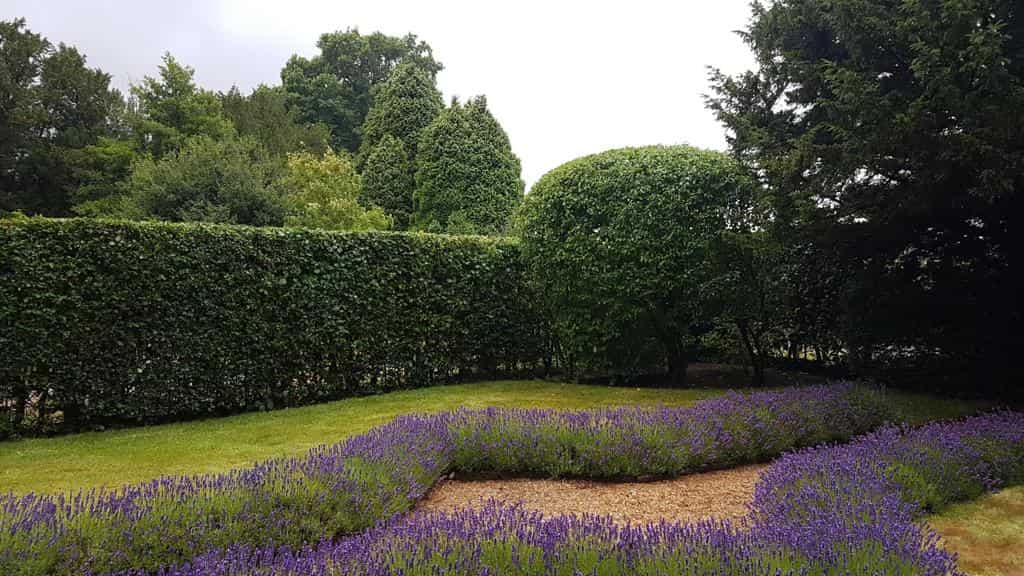
A well-maintained hedge can provide privacy, structure and an attractive natural boundary, but continual growth can gradually reduce the space available around an entrance. What begins as a few shoots extending towards a path or driveway can eventually become a much wider hedge that makes everyday access increasingly awkward.
For property owners in Fordham, Cambridge, professional hedge cutting can help restore a more practical boundary while retaining the hedge as an established feature. The key is determining whether the hedge simply needs routine trimming or whether its height, width, density and previous management mean a more considered approach is required.
When an Overgrown Hedge Around an Entrance Needs Professional Attention
Hedges rarely become obstructive overnight. Growth develops gradually, which means homeowners often adapt to an entrance becoming narrower without immediately recognising how much usable space has been lost.
Professional attention becomes particularly useful when ordinary trimming is no longer maintaining the required dimensions, when access has become restricted or when reducing the hedge requires careful decisions about how much established growth should be removed.
The Entrance Has Become Noticeably Narrower
One of the clearest signs is a gradual reduction in usable width.
A hedge growing alongside an entrance can extend further out each season. Even relatively modest growth on both sides can noticeably change the available space.
Where vehicles, bicycles or pedestrians regularly use the entrance, this can make access less convenient.
Professional hedge cutting can restore a clearer boundary line rather than simply shortening the most obvious protruding shoots.
Branches Are Extending Across a Path
Hedges bordering pedestrian entrances can gradually spread into the walking area.
People may begin stepping around branches, brushing against foliage or moving towards the opposite edge of the path.
This is a practical indication that the hedge is no longer being contained within an appropriate footprint.
Cutting it back to a more suitable line can restore usable space while keeping the hedge itself intact.
A Driveway Entrance Can Become Increasingly Restricted
Where hedges grow alongside a driveway entrance, width is particularly important.
Continual side growth can reduce clearance and make the entrance feel tighter than it originally was.
Simply cutting back a handful of long shoots may provide only temporary improvement if the main body of the hedge has already expanded considerably.
A professional cut can consider the complete profile and determine how the sides should be managed.
Overhanging Growth Can Affect the Usable Height
Width is not the only consideration.
Some hedges and larger hedge plants produce growth that arches over entrances or paths. Over time, this can reduce overhead clearance.
Selective cutting may be needed to remove or shorten particular growth while retaining an appropriate overall shape.
This is different from simply cutting the complete top lower when the actual problem is limited to specific overhanging sections.
The Hedge May Have Become Wider at the Top
Hedges do not always grow evenly.
If regular cutting has concentrated mainly on the lower sides, the upper sections can gradually become broader. This can create an overhanging profile that takes up increasing space around an entrance.
Correcting the shape may require more careful work than an ordinary light trim.
The existing structure and amount of foliage should be assessed before substantial growth is removed.
Long Shoots Can Make an Otherwise Maintained Hedge Look Untidy
Sometimes the hedge remains broadly within suitable dimensions but produces vigorous individual shoots.
These can extend into an entrance, disrupt the outline and make the boundary appear less maintained.
Where the underlying hedge remains appropriately sized, routine professional cutting may be all that is required.
This is an important distinction because not every overgrown-looking hedge needs significant reduction.
Repeated Light Trimming May No Longer Be Enough
Routine trimming works well when a hedge is already close to the desired dimensions.
It becomes less effective when the hedge has gradually increased in width year after year.
If every trim removes only the most recent soft growth, the permanent framework beneath can continue expanding.
Eventually, the hedge may require more considered reduction to restore a manageable profile.
Professional assessment can help determine whether this is appropriate for the particular hedge.
An Entrance Should Be Considered as a Complete Space
A hedge should not be assessed solely from directly in front of it.
The way the complete entrance functions matters.
Consider where people walk, how vehicles approach, where gates open and which sections of the hedge create the greatest restriction.
Sometimes only one part of a long hedge is causing the problem.
Targeted management of that section may be more appropriate than heavily reducing the complete boundary.
Gate Access Can Be Affected by Hedge Growth
Hedges growing beside gates can gradually interfere with their practical operation.
Branches may extend into the opening or occupy space immediately beside the entrance.
In these circumstances, hedge cutting should focus on restoring useful clearance around the entrance while maintaining a coherent boundary.
Simply cutting a narrow opening through an otherwise overgrown hedge may produce an awkward result and fail to address the surrounding growth.
Dense Growth Can Conceal the Hedge’s True Shape
An established hedge can become so dense that its underlying framework is difficult to see.
The outer foliage may make it appear as though a substantial reduction would be straightforward, but the distribution of live growth can vary considerably beneath the surface.
Professional hedge cutting is particularly valuable when significant reduction is being considered.
The objective should be to understand how the hedge is growing before deciding how far it can appropriately be cut back.
Not Every Hedge Responds the Same Way to Heavy Cutting
Different hedge plants respond differently when substantial amounts of growth are removed.
This matters when an entrance has been allowed to become restricted for several years.
Cutting heavily into established growth without considering the hedge itself may not produce the desired result.
A professional approach considers the type, condition and growth pattern of the hedge before determining an appropriate level of reduction.
Cutting Harder Is Not Always the Best Solution
When a hedge has become inconveniently large, it can be tempting to remove as much growth as possible in one visit.
More cutting, however, does not automatically produce a better result.
A hedge needs to remain appropriate to its species and existing condition. In some situations, a measured reduction can provide the required clearance without unnecessarily altering the complete boundary.
The amount removed should be guided by the actual problem.
An Overgrown Hedge May Need Gradual Improvement
A hedge that has expanded considerably over many years may not always be suitable for drastic reshaping in a single session.
Depending on its condition and growth characteristics, a more measured approach may be preferable.
This can involve restoring practical clearance first and then maintaining the hedge more consistently.
The aim is to establish dimensions that can realistically be managed in the future rather than creating a temporary result that quickly becomes problematic again.
Height Can Become a Separate Management Issue
A hedge blocking an entrance may also have become considerably taller than intended.
Excessive height can make routine maintenance increasingly difficult and may contribute to an overly dominant boundary.
Professional hedge cutting can assess height and width separately.
A hedge may need its sides brought back while the existing height remains appropriate, or height reduction may form part of the work where genuinely necessary.
An Uneven Top Can Make the Whole Hedge Look Overgrown
As hedges mature, different sections can grow at different rates.
The result may be an irregular upper line with individual stems extending noticeably higher than surrounding growth.
Professional cutting can restore a more consistent outline where appropriate.
However, visual neatness should be considered alongside the practical dimensions of the hedge. The priority around an entrance is ensuring that the boundary works effectively for the space.
Previous Cutting Can Influence the Current Shape
The way a hedge has been maintained in previous years often determines its present dimensions.
Repeatedly trimming only the outermost growth can gradually create a hedge that is wider than originally intended.
Uneven cutting can also encourage some sections to become more prominent than others.
Understanding this history helps explain why a hedge may now require more than another superficial trim.
Regular Maintenance Can Prevent Entrance Space Being Lost Again
Once a hedge has been brought back to suitable dimensions, consistent maintenance becomes important.
Regular cutting can manage new growth before it significantly reduces the available entrance space.
This is generally easier than allowing several seasons of growth to accumulate and then attempting another substantial reduction.
The appropriate maintenance pattern depends on how quickly the hedge grows and the dimensions that need to be retained.
Professional Cutting Can Produce a More Consistent Finish
Working around an entrance involves more than simply removing protruding branches.
The sides, top and transition into adjoining sections need to relate to one another so that the hedge retains a coherent appearance.
Professional hedge cutting can establish cleaner lines and a more consistent profile while concentrating on the areas affecting access.
This can make the entrance feel noticeably more open without unnecessarily removing the hedge itself.
Professional Assessment Helps Determine How Much Cutting Is Appropriate
The most important question is not simply whether the hedge looks overgrown, but what needs to change for the entrance to function properly.
At Fordham Tree Surgeons, we assess overgrown hedges in Fordham, Cambridge by considering their current dimensions, growth pattern, condition and relationship with the entrance.
Where routine cutting is sufficient, there is no reason to recommend more extensive work. Where years of growth have significantly reduced access, a more considered reduction may be appropriate.
The aim is to restore practical clearance while managing the hedge in a way that suits its existing condition.
Conclusion
Professional hedge cutting is worth considering when growth begins narrowing a driveway or path, interfering with gates, extending into frequently used areas or becoming too substantial for ordinary trimming to manage effectively.
The right solution does not necessarily involve cutting the hedge back as severely as possible. Some boundaries simply need routine trimming, while long-established overgrowth may require more careful reduction based on the hedge’s condition and growth characteristics.
If an overgrown hedge is beginning to restrict an entrance in Fordham, Cambridge, contact Fordham Tree Surgeons. We can assess the hedge and recommend an appropriate cutting approach to restore practical access while retaining a well-managed boundary.
Call us on: 01206 581 299
Click here to find out more about Fordham Tree Surgeons
Click here to complete our contact form and see how we can help with your tree care needs.